The state of the cloud in China (2024)

5 February 2024

Share this article

China is one of the world's biggest economies – so how is its cloud market faring? Learn about its home and overseas markets in our 5-minute read.

 Back in 2006, Amazon launched AWS as the first public cloud service. It was a time when "cloud computing" still had a futuristic air. Today, it's the engine room of the internet and a ubiquitous feature of our lives at work, at home and on the move. 

"The internet" is no longer something that can be tidily separated from our lives. Where once we logged on and off, now the majority of us are permanently online, whether we're checking our devices or not. 

Global business is unthinkable without cloud computing. It's as fundamental to the running of systems, software and devices as water, gas and electricity. 

Is it any surprise, then, that the world's biggest nations are investing heavily in the cloud? 

China is one of the biggest global players in the cloud market. But despite its overall growth, the picture for 2024 is mixed. The domestic market is sluggish and cloud providers are looking overseas to boost profits. Meanwhile, the ongoing trade war with the USA is limiting growth. 

The big picture 

So far, China's adoption of cloud technologies is inextricably tied up with its consumer market. Like elsewhere, online retail is a big deal in China. Retailers need to know that they have the computing resources to respond to spikes in customer demand. 

Take Singles' Day. Each November 11, single people are encouraged to treat themselves to gifts. On this day, online traffic can go into overdrive. The growth of data centres in China has partly been in response to this trend.

It's not certain, however, that retailers will continue to lead the way in the expansion of China's cloud market. Some saythe next wave of cloud migration could occur in China's industrial and manufacturing sectors. 

Key statistics 

There are two sides to the cloud coin. One is physical infrastructure. The other is investment in cloud services. 

In 2023, China had 448 data centres. This ranked them behind the UK (517), Germany (522) and global leaders the USA (5,375). It's important to note, however, that these statistics don't take into account the sizeof the data centres in each country. 

In the third quarter of 2023, China spent $9.2 billion (€8.48 billion) on cloud infrastructure. That's over a tenth of the world's spending on the cloud. Seventy-three percent of the market is occupied by three cloud vendors: Alibaba (known outside China mainly as a low-cost eCommerce store), Huawei and Tencent. 

Alibaba Cloud has 39% of the market share, Huawei Cloud has 19% and Tencent Cloud, 15%. 

But what do these statistics mean for the future of the cloud in China? The picture isn't all rosy. 

Is the future of the cloud in China overseas? 

Despite China's growth spurts, domestic margins are
dwindling. A combination of a saturated home market, sluggish growth and the US-China trade war are all contributing to this droopy state of affairs. 

In response to this, the three main cloud vendors are looking for investment opportunities overseas. In particular, they've set their sights on Southeast Asia and the Middle East – areas where US giants Microsoft and Amazon are less prevalent.

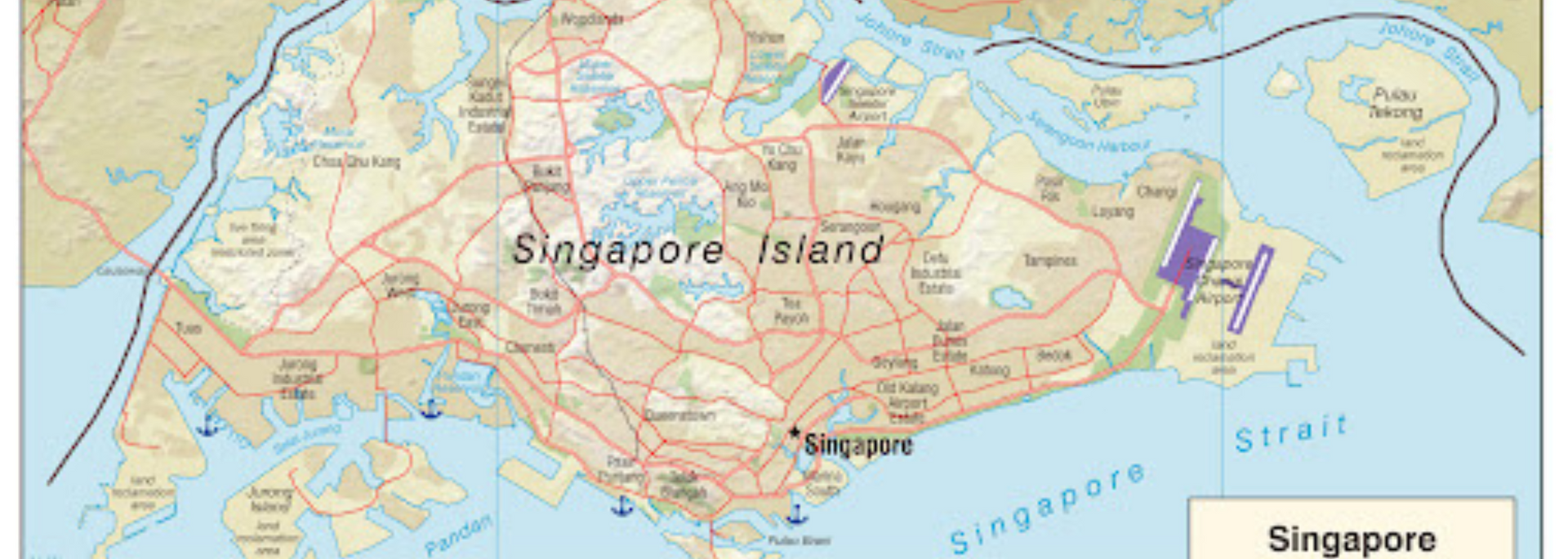
 In 2022, for instance, four data centres were built in Singapore. Two contracts were awarded to Chinese-backed companies, while two were given to US-backed companies. This shows both China's desire to expand overseas and its uneasy balancing act with the USA. 

To see this overseas investment in action, let's turn our gaze to Saudi Arabia. 

The Chinese cloud in Saudi Arabia 

In September 2023, Huawei opened up a new cloud service centre in Saudi Arabia. The company's president of marketing and sales described it as "our focus in serving the Middle East, Central Asia and Africa". In the same year, Tencent Cloud partnered with Saudi Arabia's telecoms service Mobily. 

Conflict with the USA 

When talking about China's cloud market, it's impossible not to consider the effect of the ongoing US-China trade war. This began in early 2018 when Donald Trump began setting tariffs and other trade barriers on China. Biden inherited these measures and has so far left them in place. 

One example of this would be the restrictions placed on China getting US microchips. Similarly, Biden floated the idea in the summer of 2023 of getting US cloud service providers to seek government approval before providing Chinese companies with AI cloud services. 

Taken globally, cloud provision is
political. In the words of Trey Herr, director of the Atlantic Council's Cyber Statecraft Initiative under the Digital Forensic Research Lab (DFRLab): 

"Cloud computing was political from the beginning… and it will be political at the end." 

This is largely because of the physical nature of cloud resources. He goes on: "It requires a tremendous amount of physical infrastructure and all of that infrastructure has to sit somewhere. So there are the local politics of the jurisdiction it lives in." 

Despite this ongoing conflict, China remains ambitious in its cloud market aims. 

What's next for China? 

These factors notwithstanding, 2023 saw a boosted global presence for Chinese cloud providers thanks to the frantic hype around generative AI – and in October of that year, the government announced it would double its cloud computing market by
2025

An announcement isn't a prediction, of course – and governments worldwide are prone to declaring that growth will happen come what may. But given China's rapid economic expansion, this 100% increase may not be too wide of the mark. 

Conclusion 

China is a global player in the cloud market. However, its prospects are mixed thanks to a combination of slow growth at home and restrictions on trade abroad. Whatever else happens, it seems likely that providers will continue to look overseas, as well as at home, to invest and expand. 

Are you looking for an
end-to-end cloud migration service? At Ascend Cloud Solutions, we've handled more than 400 migrations and counting. Get in touchtoday for a free, no-obligation consultation. 

Recent Posts

Lab training is built on powerful hosting services.
by Simon Edward 27 July 2026
Lab training is built on powerful hosting services. Explore the science behind the services and how we deliver.
VCF 9 training labs have the potential to transform your business. Learn how
by Simon Edward 13 July 2026
VCF 9 training labs have the potential to transform your business. Learn how our lab hosting expertise puts this power at your disposal.
Disaster recovery planning is an essential part of virtual learning. Explore 6 key aspects
by Simon Edward 6 July 2026
Disaster recovery planning is an essential part of virtual learning. Explore 6 key aspects of our approach.
At Ascend Cloud Solutions, we host training labs for VCF 9.0. Find out how the new portfolio adds
by Simon Edward 30 June 2026
At Ascend Cloud Solutions, we host training labs for VCF 9.0. Find out how the new portfolio adds value for your learners.
Delivering VEDP labs needs resources and behind-the-scenes expertise. See how
by Simon Edward 29 June 2026
Delivering VEDP labs needs resources and behind-the-scenes expertise. See how quality hosting drives value for learners and course providers.
Learn how virtual training can help cloud engineers master VMware Cloud Director
by Simon Edward 22 June 2026
Learn how virtual training can help cloud engineers master VMware Cloud Director in our industry guide.
Do you need to learn how to troubleshoot vSAN storage issues? Find out how VEDP labs can help.
by Simon Edward 15 June 2026
Do you need to learn how to troubleshoot vSAN storage issues? Find out how VEDP labs can help.
VEDP and VMware training labs give cloud engineers the knowledge they need to use Cloud Foundation 9
by Simon Edward 1 June 2026
VEDP and VMware training labs give cloud engineers the knowledge they need to use Cloud Foundation 9. Find out more in our guide.
Looking to learn more about VMware vSphere, but don't want to upgrade your hardware? Find out
by Simon Edward 25 May 2026
Looking to learn more about VMware vSphere, but don't want to upgrade your hardware? Find out how VEDP labs can help.
How do lab hosting providers keep training labs available around the clock? Discover the systems
by Simon Edward 18 May 2026
How do lab hosting providers keep training labs available around the clock? Discover the systems and processes behind always-on learning.
Show More