



Why weather forecasts rely on cloud computing

simon • 6 January 2025

Share this article

Today's weather forecasts rely on cloud-based data modelling. Find out more in our easy-to-follow guide.

The art of weather forecasting has a long history. It began in 650 BC when the ancient Babylonians would study the clouds in the sky and make predictions based on the patterns they saw.


Since then, weather forecasting has embraced – and invented – new technologies to make its predictions more finely tuned.
In the analogue age, weather forecasters relied on anemometers, hygrometers, barometers, rain gauges and wind vanes. Then, as the Information Age kicked in, they embraced weather stations, satellites and radar.


Today, weather forecasts rely on cloud computing. This provides the massive computational power needed to run complex weather prediction models.


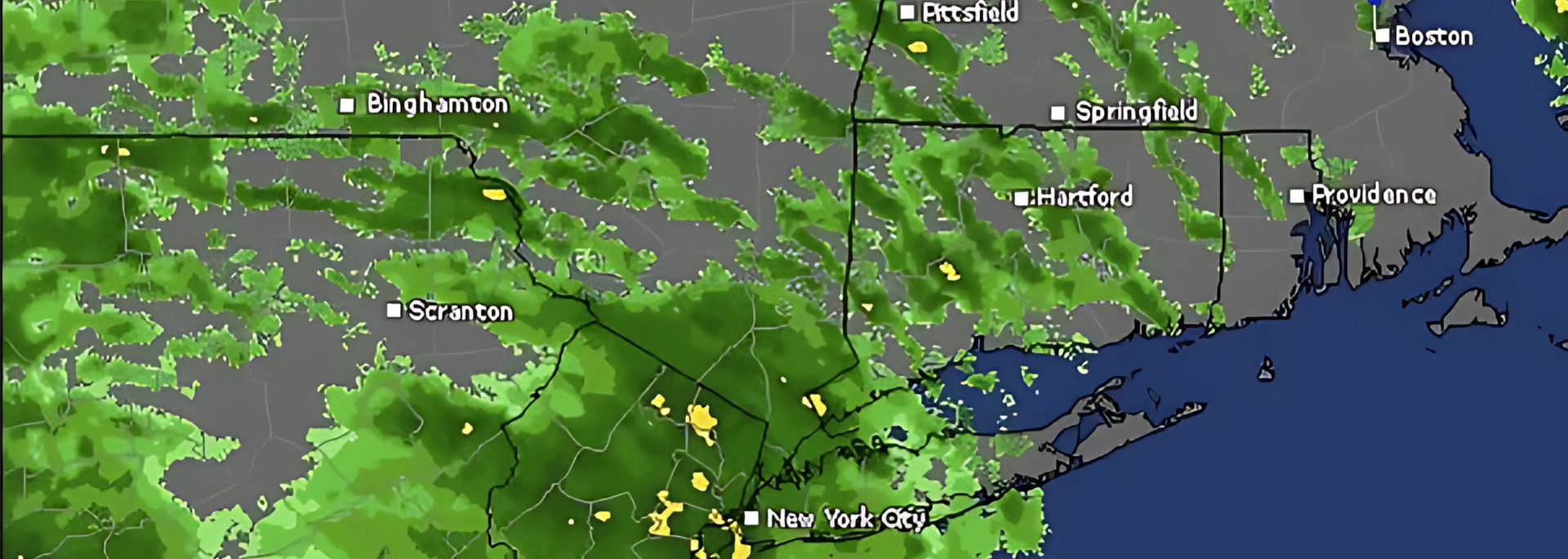
You see, forecasts come from data. Lots of data. Data from satellites, radar and weather stations. Cloud computing provides the computational capacity needed to crunch those numbers and spit out tomorrow's weather.


Everyone benefits from accurate weather forecasting – everyone from Jo and Joe Bloggs to pilots, farmers, power companies, filmmakers, ice cream sellers… The list goes on and on.


So, join us as we dive deep into a fascinating topic: how cloud computing can make predictions about temperature, precipitation and wind more accurate than ever.


Why is cloud computing essential for weather forecasting?


The short answer is that weather forecasting requires complex calculations based on vast reservoirs of data. The question for meteorologists is how this data can be effectively handled.


On-premise data centres are a possibility. But they cost a lot to run and maintain – and if more computational power is needed, they're a devil to scale up.


The cloud, by contrast, is managed by the cloud services provider (CSP). It's responsible for maintaining the servers that make those calculations possible. If a server goes down, they get in there with torches and screwdrivers.


This pay-per-use basis is far more cost-effective than investing in a supercomputer. If a meteorological agency needs more resources, it can scale up with ease. The business angle is that cloud computing offers complex weather models on a budget with no compromise to accuracy.

But this scalability isn't just about money. It also lets meteorologists make quick adjustments to model configurations depending on the region or weather event under study.


Cloud platforms also provide meteorologists with easy access to a wide range of data sources. It's simpler than ever for experts to study and quickly switch between satellite images, observations from the ground and historical weather data.


Finally, cloud platforms facilitate collaboration between weather forecasting teams and research institutions. Data sharing is quick, easy and secure.


Of course, computerised modelling is nothing new. It's been around since the 1960s. The added value that cloud computing brings is its scalability, cost-effectiveness and sheer computational power.


How have weather forecasts improved?


The 20th and 21st centuries have seen a significant improvement in the accuracy of weather forecasts. There are still many factors affecting the overall accuracy, but the general trend can be seen
here.


There are three key reasons why accuracy has improved. The first is that satellites in the sky and weather stations on land are collecting more data than ever. There are also more weather stations in more parts of the world.


The second reason is that the instruments used have improved in accuracy. And the third is that the computers that run weather forecasting models are unprecedentedly powerful.


The UK's Met Office used to model the world's weather in 90-kilometre-wide squares. Today, it's reduced that to 1.5-kilometre squares.
Smaller squares mean more complex calculations. To achieve this, you need to use either a supercomputer or cloud-based technologies.


In the world of weather forecasting, the stakes are high. Accurate forecasts can save lives by providing early warnings of extreme weather events.


However, high-quality weather forecasting isn't evenly distributed across the world. There's a significant "quality gap" between richer and poorer countries.


What is the next generation of weather forecasts?

In the UK, the Met Office is collaborating with the Alan Turing Institute to deploy AI in weather prediction.


This effort is inseparable from the cloud. The Turing Institute provides AI model designs and ways to optimise and scale them up on cloud platforms.


In 2024, the partnership
announced it had developed "FastNet", a machine-learning model that could be "the next step in the evolution of weather prediction".


The goal of the collaboration is to deploy FastNet for "the optimal blend of physics-based and ML-based modelling for UK weather prediction".


The private sector and the European Centre for Medium-Range Weather Forecasts have developed AI weather models that made the news during the USA's 2024 hurricane season.


However,
concerns have been raised that the NOAA – the American weather forecasting agency and the largest body of its kind in the world – is falling behind in this high-tech race.


In China, companies like Alibaba and Huawei are developing advanced AI models for weather forecasting.


Alibaba's "nowcasting" platform
"produces high-resolution imagery with one-kilometre grid spacing with updates available every 10 minutes".


It can, Alibaba claims, help farmers, couriers and power stations adapt to changes in the weather. Then there's Huawei's Pangu-Weather, a deep learning-based system operating at 0.25° resolution.


Forecasting the future of weather forecasting is a mug's game. But it seems likely that AI will continue to improve the accuracy of weather models.


Weather apps


It's not just meteorological organisations that use cloud technologies. Millions of people worldwide use cloud-based weather apps to plan for the day or days ahead.


The most popular apps include the Met Office's, Forecast Advisor, Carrot Weather, The Weather Channel, AccuWeather, WeatherBug and Weather Underground.


It's a great example of how cloud technologies benefit both businesses and customers. By providing substantial computing power at low prices, businesses provide better services and customers get the information they need.


Ascend Cloud is a trusted, Ireland-based consultancy specialising in
cloud transformation solutions for global organisations. For more cloud computing news and analysis, follow our blog.

Recent Posts

Cloud engineers need to learn from their mistakes. Find out how this can be done safely
by Simon Edward 26 January 2026
Cloud engineers need to learn from their mistakes. Find out how this can be done safely with simulated lab environments.
VEDP courses provide cloud engineers with hands-on training. Find out how they can prepare staff for
by Simon Edward 23 January 2026
VEDP courses provide cloud engineers with hands-on training. Find out how they can prepare staff for the real thing.
More and more enterprises are training IT staff with virtual labs. Find out why
by Simon Edward 5 January 2026
More and more enterprises are training IT staff with virtual labs. Find out why in our jargon-free guide.
What are VMware vSphere, vSAN and NSX – and how do they work together? Find out
by Simon Edward 2 January 2026
What are VMware vSphere, vSAN and NSX – and how do they work together? Find out in our accessible guide.
Managing a cloud solution like VCF requires training – and training needs to include hands-on
by Simon Edward 26 December 2025
Managing a cloud solution like VCF requires training – and training needs to include hands-on exercises. Here's why.
More and more training programmes take place online. Explore 6 key benefits in our guide
by Simon Edward 22 December 2025
More and more training programmes take place online. Explore 6 key benefits in our guide to 21st-century learning.
More and more cloud computing students take part in virtual labs. So, what are they –
by Simon Edward 19 December 2025
More and more cloud computing students take part in virtual labs. So, what are they – and how are they used by trainers?
by simon 26 February 2025
These days, the majority of enterprises hold huge quantities of data. Find out how big clouds can help.
by simon 24 February 2025
What are cloud APIs and how can they help your business bloom? Find out in our jargon-free guide.
by simon 22 February 2025
Cloud computing costs are set to rise in 2025. Are you paying too much? Join us as we explore the facts.
Show More